
he Emperor's Cup final at Tokyo's National Stadium rarely feels like a neutral affair. In January 2023, a crowd of 56,000 watched Ventforet Kofu, a second-division side, push J1 champions Sanfrecce Hiroshima to penalties after a 1-1 draw. Kofu's fans had traveled from Yamanashi prefecture in buses draped with flags;Hiroshima's supporters filled the opposite end with purple banners. The Emperor's Cup, Japan's oldest national football competition。has a way of turning underdogs into folk heroes and turning a routine cup tie into a family argument that lasts for decades.Founded in 1921 as the All-Japan Football Championship。
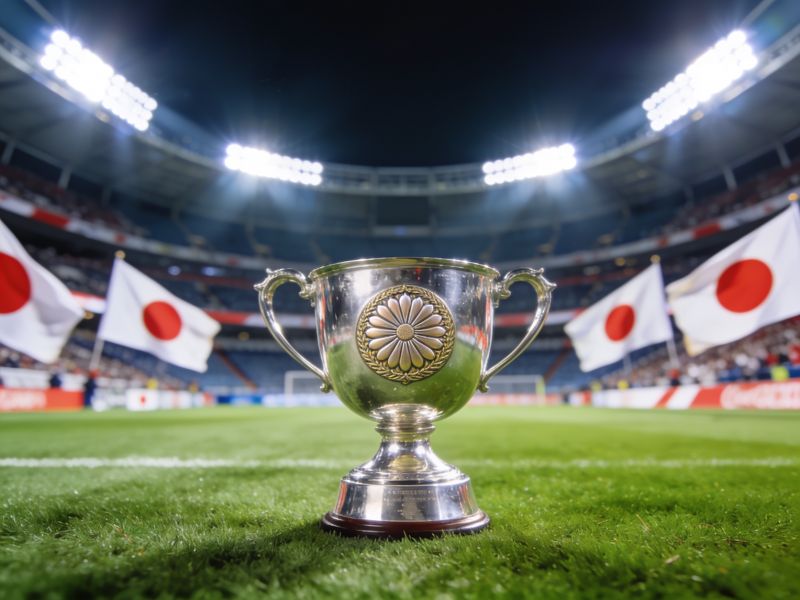
the Emperor's Cup predates the J.League by more than seventy years. Its trophy, a silver cup topped with the Imperial chrysanthemum seal, is presented by a member of the Imperial family. That ceremonial weight matters. When Kashima Antlers won the 2022 edition, their players bowed before receiving the cup—a gesture that would seem odd in a league match but fits the Emperor's Cup's blend of sport and ritual. The tournament opens to every affiliated team in Japan, from J1 giants to university clubs and regional league sides. In 2019, a team from the Tokyo University Football Association, which plays in the lower reaches of the Tokyo league system, reached the first round proper. They lost 3-0, but the match was broadcast nationally.What makes the Emperor's Cup compelling is the tension between amateur idealism and professional reality. J.League clubs enter in the second round。while prefectural champions and university teams fight through earlier rounds. The result is a schedule that can produce bizarre pairings: in 2018, a team of salarymen from the Hokushinetsu region faced a J1 club in the second round and lost 7-0, but their goalkeeper, a part-time post office worker, saved a penalty from a former Japan international. That kind of moment is not scripted, and it is why attendance at early-round matches, often held at small prefectural stadiums with running tracks, can exceed 10,000. The Emperor's Cup has also become a backdoor into continental competition: the winner earns a spot in the AFC Champions League, which raises the stakes for mid-table J1 clubs that have little hope of a league title.The tournament's format has shifted over the years, but its core appeal remains unchanged. The 2020 edition was compressed and played behind closed doors due to COVID-19, with Kawasaki Frontale winning a final that felt strangely hollow without the usual fan marches to the stadium. By 2022, the Emperor's Cup had returned to a full home-and-away format through the early rounds。and the final drew a television audience of over 30 million in Japan. J.League clubs now take the competition more seriously than they did a decade ago;squad rotation is common, but managers no longer field reserve teams in the third round. The Emperor's Cup has become a proving ground for young players—Takefusa Kubo's first senior goal for FC Tokyo came in a 2017 Emperor's Cup match against a university side.For all its tradition, the Emperor's Cup faces a persistent criticism: fixture congestion. J1 clubs that go deep in the tournament can play six extra matches in a season, and the final is held in late December, after the league has ended. Some coaches have publicly complained about the scheduling, arguing that the competition's prestige does not justify the physical toll. Yet the Emperor's Cup survives, and even thrives, because it offers something the J.League cannot: unpredictability. A regional league team can host a J1 club and sell out a 15,000-seat stadium. A university side can knock out a professional team, as happened in 2017 when Waseda University beat J1 club Ventforet Kofu. Those moments are not anomalies;they are the point. The Emperor's Cup is not a perfect tournament—its early rounds can feel disorganized, and the gap between amateur and professional teams is widening—but it remains the one competition where the entire Japanese football pyramid meets on the same field。
and that is worth preserving.