
he German eagle isn't just a bird on a coat of arms. I learned that on a cold morning in Berlin。standing before the Reichstag's sandstone facade, watching a real eagle—a rescued sea eagle named Thor—spread his wings during a falconry demonstration. His handler, a gruff Bavarian named Klaus, told me, "Der Adler ist kein Symbol. Er ist ein Versprechen." The eagle is a promise. That moment stuck. The German eagle has carried dreams for centuries—imperial, republican, and deeply personal.Walk through any German town hall and you'll find the eagle perched on flags, seals, and stone reliefs. But talk to people, and the bird takes on different meanings. For a young Syrian refugee I met in Dresden, the eagle on her naturalization certificate meant safety. For a Black Forest clockmaker, it meant craft passed down five generations. For a football fan in Dortmund, it meant the national team's crest—and the hope of a World Cup. The German eagle: dreams come true sounds like a slogan。
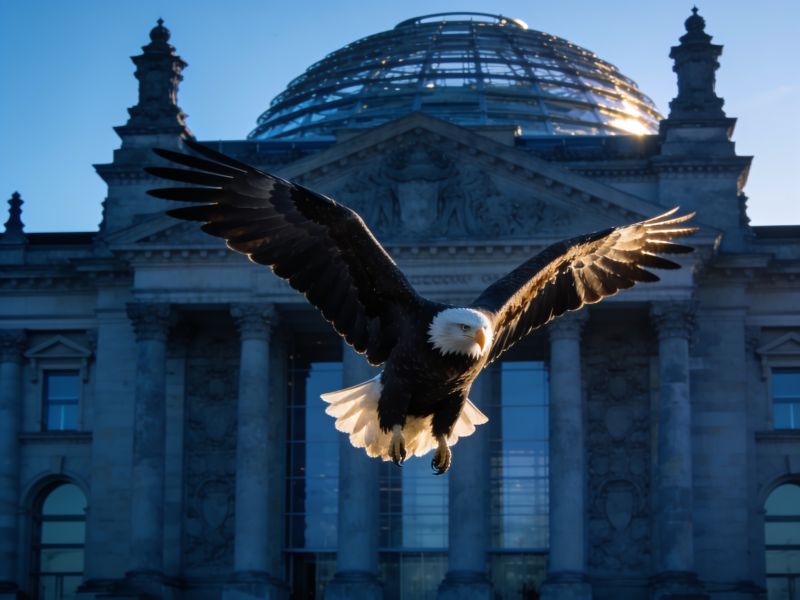
yet it keeps showing up in real lives, stitched into banners and tattooed on forearms.The eagle's history is messier than the tidy icon suggests. Charlemagne's eagle, the Holy Roman Empire's double-headed bird。Bismarck's imperial standard—each era reshaped the symbol. After 1945, the Federal Republic chose a leaner, unadorned eagle. No crown, no imperial orb. A deliberate break. I once asked a historian at the German Historical Museum why the modern eagle looks almost severe. She shrugged. "Because dreams after Auschwitz must be humble." That sentence has stayed with me longer than any textbook. The German eagle, in its postwar form, carries a quiet warning alongside its promise.Where does the dream part come in?Consider the Mittelstand—Germany's small and medium-sized companies. Many family firms display the eagle in their logos, not out of nationalism but as a nod to reliability. A toolmaker in Solingen told me his great-grandfather stamped the eagle on every pair of scissors exported to America in the 1890s. "Customers trusted the bird," he said. "They still do." That's the German eagle: dreams come true in a mundane, practical sense—a brand promise built over generations. Not romantic. Just real.I don't wave flags. Most Germans I know don't either. But the eagle still catches my eye—on a euro coin, on a border sign。
on the tail of a Lufthansa jet. It's a reminder that dreams don't always arrive as grand gestures. Sometimes they come as a rescued bird stretching its wings over a government lawn, or a stamp on a pair of scissors. The German eagle: dreams come true, sure—but only if you look closely enough to see the work behind the symbol.